


Iziko South African National Gallery Annexe
80 St John’s Road, Cape Town, 8001
Saturday, October 17, 2026
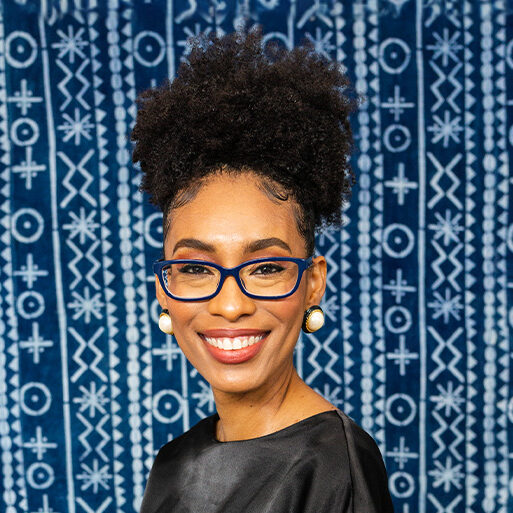
Jordia Benjamin has dedicated their career to advancing the role of the arts as a catalyst for community transformation, equity, and collective memory. A seasoned arts administrator, with over 15 years of visionary leadership in the cultural sector, Benjamin has led a cultural organization, museum departments, developed nationally and internationally recognized programs that have shaped policy and centers inclusion, access, and the power of storytelling.
As the Executive Director of Indigo Arts Alliance, Benjamin has stewarded million-dollar budgets, led teams through periods of rapid growth and change, and forged lasting partnerships across disciplines and geographies. Whether building residency programs for underrepresented artists, re-imagining museum collections through a decolonial lens, or mentoring the next generation of cultural workers, Benjamin leads with integrity, purpose, and vision.
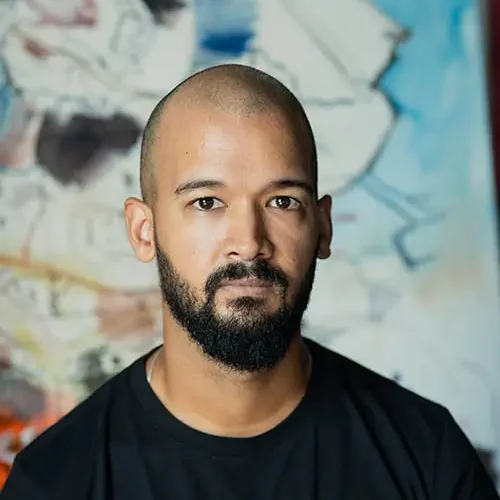
Rory Emmett is an artist and educator living and working in Cape Town, South Africa. He completed his BA Fine Art at the Michaelis School of Fine Art (UCT) in 2014, where he also completed his Master of Fine Art with distinction in 2023. He holds a Post Graduate Certificate in Education in Visual Art and Design didactics from Cape Peninsula University of Technology (CPUT) 2017. Over the years he has taught art at various levels and in both informal and formal capacities and has exhibited his artistic work both locally and internationally. Rory was appointed Art Educator at Iziko Museums of South Africa in 2023 and was appointed Chief Educator of art collections in 2026.
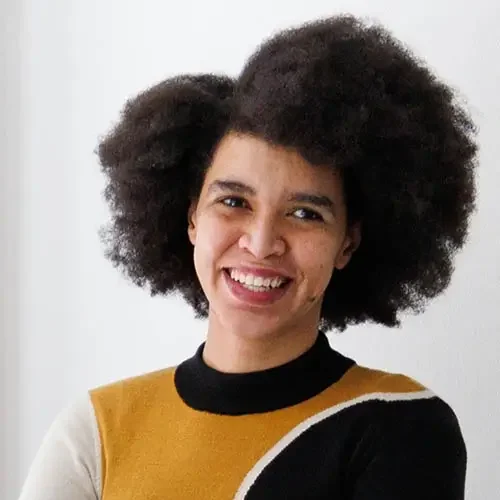
Lindsay Hendricks is the Chief Educator: Social History at Iziko Museums of South Africa. Her practice is situated at the intersections of history, heritage and identity. She is passionate about the transformative power of art and education as a tool for healing, and is dedicated to accessible, holistic education.
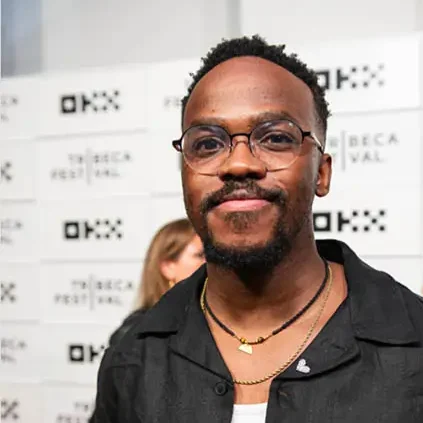
Pola Maneli is an animation director and illustrator based in South Africa. His work brings together bold and graceful compositions, and deeply researched concepts to tell compelling stories about people, places, and ideas.
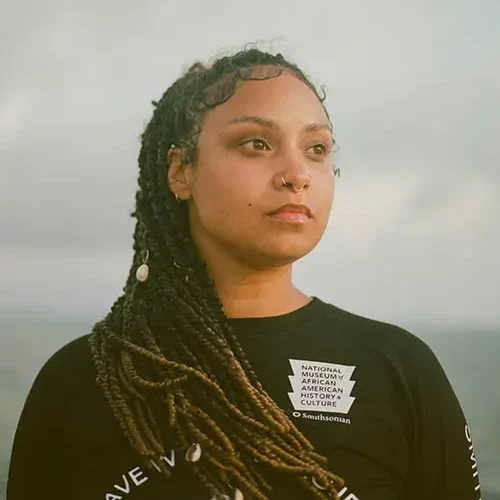
Gabrielle Miller is the Smithsonian’s first archaeologist of the African Diaspora, at the National Museum of African American History and Culture (NMAAHC). Gabrielle is an underwater and terrestrial archaeologist, and a Scientific Diver under the auspices of the American Academy of the Underwater Sciences. In this capacity, she engages in and facilitates maritime archaeological research and training programs on four continents, collaborating with institutions and communities across the African Diaspora. She received her M.A. in 2016 at the University of Arizona and is nearing completion of her doctoral program at the University of Tulsa with a focus in African Diaspora Archaeology. For the last four years she has worked in the Center for the Study of Global Slavery at NMAAHC conducting international research, creating curriculum and professional training programs as a co-coordinator of the Slave Wrecks Project, and assisted with several exhibitions and programs (In Slavery’s Wake, Art in the Wake, Ritual and Repair). She also serves on the Smithsonian Scientific Diving Board as NMAAHC’s first institutional board member.
Her philosophies and praxis as a scholar center on resistance, reclamation, and colonial deconstruction and as an extension of this ethic, she engages archaeology as just one of many tools that can be claimed and molded to create a more holistic and representational narrative of the past to re-establish people of African descent as the authorities of their own narratives, especially in spaces of scientific inquiry. Her work with the Slave Wrecks Project utilizes the Maritime Archaeology of the Slave Trade as a tool for shedding light on neglected histories, and broadening access to this practice to descendant communities. Her current research project engages the expressions and legacies of freedom and resistance through material culture in an eighteenth-and-nineteenth-century free Black community in St. Croix, U.S. Virgin Islands in collaboration with the heritage practitioners, artisans, historians, and descendants of that community.
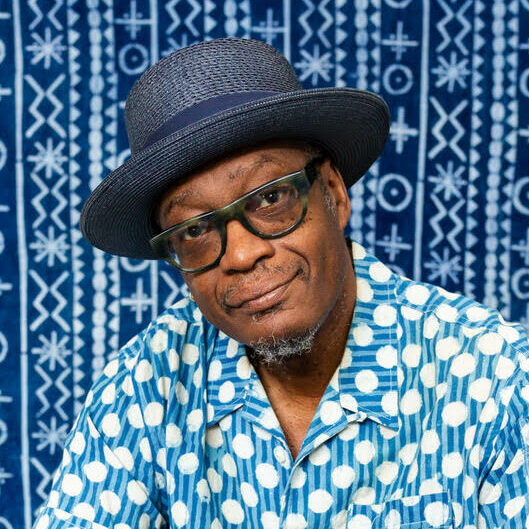
Daniel Minter, PhD (h.c), is an acclaimed American artist, recognized primarily for his work in painting and assemblage, whose themes often focus on experiences of displacement and diaspora. Minter’s work has been featured in and acquired by numerous esteemed institutions and galleries, including the Smithsonian National Museum of African American History and Culture, Portland Museum of Art, Seattle Art Museum, Charles H. Wright Museum, Farnsworth Art Museum, The David C. Driskell Center, and more. In addition to his studio practice, Minter is an award-winning illustrator of more than fifteen children’s books, earning prestigious awards such as the Caldecott Medal, the Coretta Scott King Illustration Award Honor, and an NAACP Image Award nomination. His cultural impact includes a commission from the United States Postal Service for two Kwanzaa stamps. Minter co-founded Maine Freedom Trails, illuminating the legacy of the Underground Railroad in Maine, and led a fifteen-year effort to restore the narrative of Malaga Island, culminating in its designation as a Maine public preserve. In 2018, he co-founded Indigo Arts Alliance, a nonprofit championing the artistic development of artists of African descent.
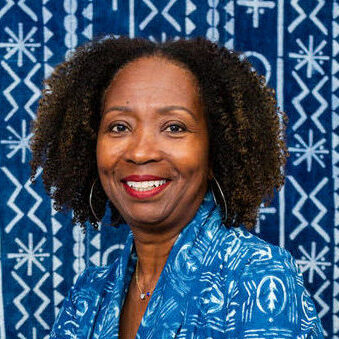
Marcia Minter, PhD (h.c), is a visionary arts leader and advocate for Black and Brown creative excellence. As Co-Founder and Chief Officer of Strategic Growth and Innovation of Indigo Arts Alliance, a nationally recognized artist residency and cultural incubator in Portland, Maine, she developed a model centered on mentorship, intergenerational exchange, and artistic legacy as tools for justice and belonging. Blending design expertise with entrepreneurial insight, Minter launched Indigo’s flagship Artist-in-Residence Program, fostering a supportive environment where Black and Brown artists from across the globe create, engage, and connect. Her leadership has secured major support from the Andy Warhol Foundation, National Endowment for the Arts, The VIA Art Fund, and many others, affirming the importance of equitable, artist-led infrastructures. Minter holds honorary doctorates from Colby College and Maine College of Art and Design, and serves as a trustee of the Portland Museum of Art.
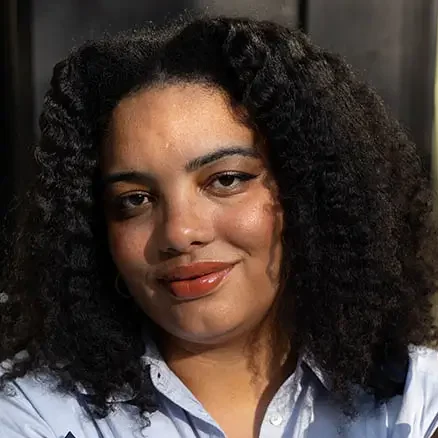
Johanna Obenda is a cultural practitioner, curator, and educator. She holds a M.A. in Public Humanities from Brown University. As a curatorial specialist at the Smithsonian National Museum of African American History and Culture, Johanna is the lead exhibition developer of the internationally traveling exhibition “In Slavery’s Wake: Making Black Freedom in the World” and co-editor of the companion publication.
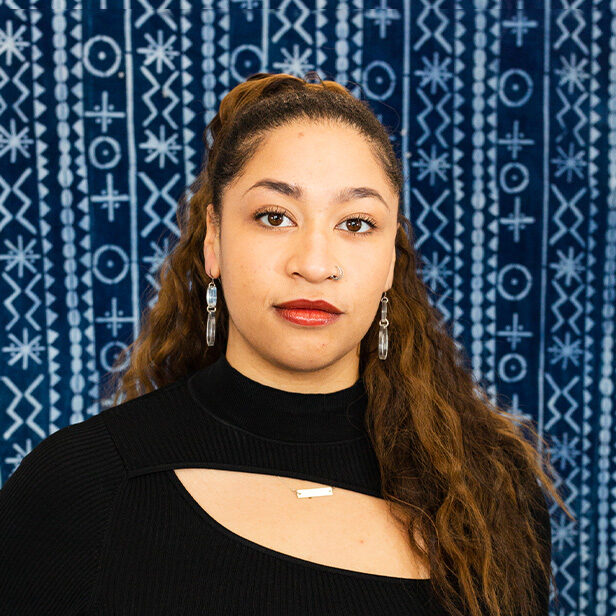
Ashley Page is the Studio and Program Manager at Indigo Arts Alliance. She serves as a point of contact for artists and supports the development of related public programs and special projects to best connect artists and communities. In her role, she ensures the smooth operations of the studio and its administrative needs. As an interdisciplinary artist, community organizer, and social disruptor, Ashley’s creative spirit, passion for community, and dedication to the artistic growth of artists of color is interwoven into her own artistic philosophy. Drawing from the power of vulnerability, collaborative honesty, and mutual understanding, her work creates the bridges between art and people.
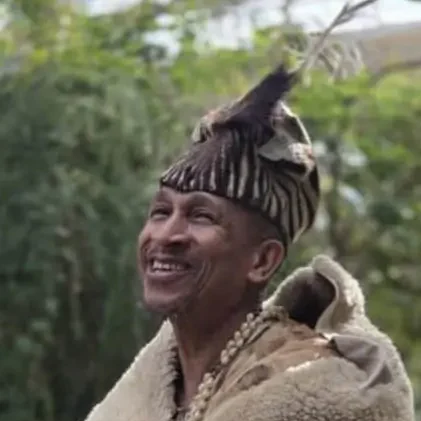
Danab ||Hui !Gaeb di !Huni!nâ !Gûkhoeb (PC Bradley Van Sitters) is the recipient of the 2011 Arts, Culture, Heritage, Language, Libraries, Museums and Archives Award in the Language Category for his relentless promotion of marginalized indigenous languages by the Western Cape Department of Cultural Affairs and Sport. A quarter century into the South African democracy, he was given the honour to make history in Parliament by being the very first ever Khoikhoi Imbongi to usher the President at the State of the Nation Address. Van Sitters is a language facilitator, alongside Aus Dorothea Davids, at the University of Cape Town, co-designing a decolonial pedagogy in the process of producing knowledge. He also hold positions as the Head of the Language Commission of the |Xarra Restorative Justice Council based at the Centre for African Studies and the Director of the Khoekhoegowab Curriculum Review Committee.
Over his decades, long career as an indigenous knowledge specialist, community historian, oral researcher, endangered language campaigner and practitioner of localized ritual archives, Van Sitters embarked on several fact-finding journeys into Little-and Greater Namaqualand regions, even as far as remote places in Namibia, Botswana and Zimbabwe, in search for indigenous knowledge keepers to probe deeper into the realization of the linguistic essence of language revitalization within the African Renaissance. In 2011 he was part of a 2011 research team alongside Dr. Levi Namaseb (UNAM) and Dr. Menan Duplessis (US) interviewing ||Naosas Jacoba Maclaire (Bloemhof) and Autab Dawid Cooper (Bloemfontein), the last speakers of the !Ora (Korana) and N|uu languages within the San and Khoi language families.
Other South African endangered language protagonists whom Van Sitters worked with include Nama elderly first language speakers the likes of ||Naosas Maria Links and ||Naosas Anna Cloete of Steinkopf in Little Namaqua, and Autab Sagarius Christiaans and ||Naosas Maria Farmer of the !Gami ╪Nūn Nama from Kuboes in Richtersveldt. Other notable figures included Gaob David Kruiper of the Kgalagadi San Bushmen in Andriesvale; Gaob Dr. Rev. Captain ||Gawamuma |Onob Hendrik Witbooi of the |Khobese Nama in Namibia; Gaotas Hendrina Martha Afrikaner of the |Hôa|aran||aixa||aes in Namibia. With vested interest in these communities, the work continued with Jan Org from Botswana and Danab Gert Link from Kuboes (Northern Cape).
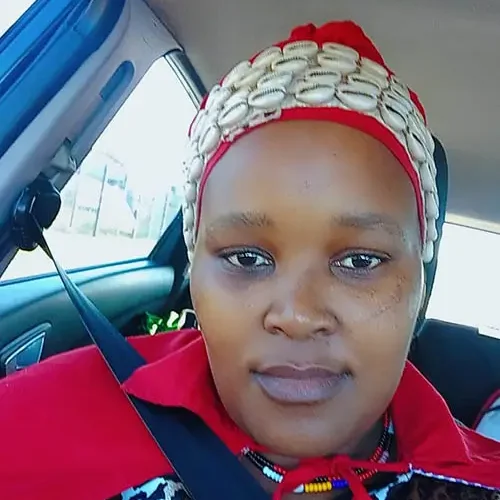
Hlela Majikela, also known by her Sangoma name Vuma, is a Sangoma and Prophet based in South Africa. Her spiritual journey is began in 2014 with a calling connected to water. As a Sangoma and Prophet, Vuma dedicates herself to assisting and supporting people through their different challenges and spiritual journeys. She specializes in luck, and has a passion for helping people find direction, hope, and positive opportunities in their lives. Vuma’s practice centers on offering people guidance, prayer, encouragement, and a safe space where they can seek spiritual support.
Outside of her life as a Sangoma and Prophet, Vuma also has a career in the hospitality industry, working as a chef at Kauai. Through both her spiritual calling and her professional journey, Vuma continues to learn, serve, and grow while remaining committed to helping others wherever she can.